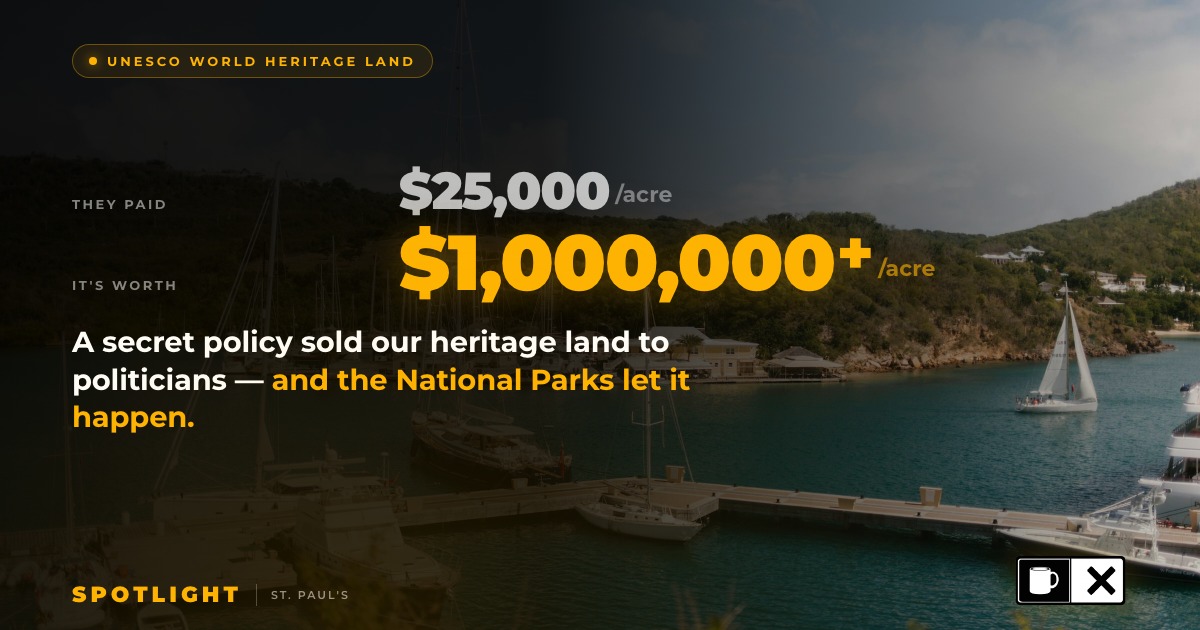
Today I want to talk about something bigger than the money. I want to talk about power — and what happens when an authority keeps reaching for more of it, outside the law, and the government does nothing to stop them.
The NPA doesn't just fail to follow the rules. It acts as though the rules don't apply to them at all.
It's Not About One Fee. It's About Unchecked Power.
The missing audits. The businesses left waiting. The declining yacht numbers. I covered all of that in my first post. But those are symptoms.
The deeper problem is this: the NPA behaves like an authority that believes it is above the law. It decides what it can charge. It decides who gets a licence and who doesn't. It decides what rules apply — to you, not to them. And when challenged, it doesn't reform. It doubles down.
Now, for the first time, a court has confirmed what many in St. Paul's have long suspected: the NPA has been operating beyond the law.
A Court Ruled the NPA Was Acting Illegally
In August 2025, the Eastern Caribbean Supreme Court delivered judgment in Antigua Investment Group Limited v National Parks Authority — Claim No. ANUHCV2021/0086.
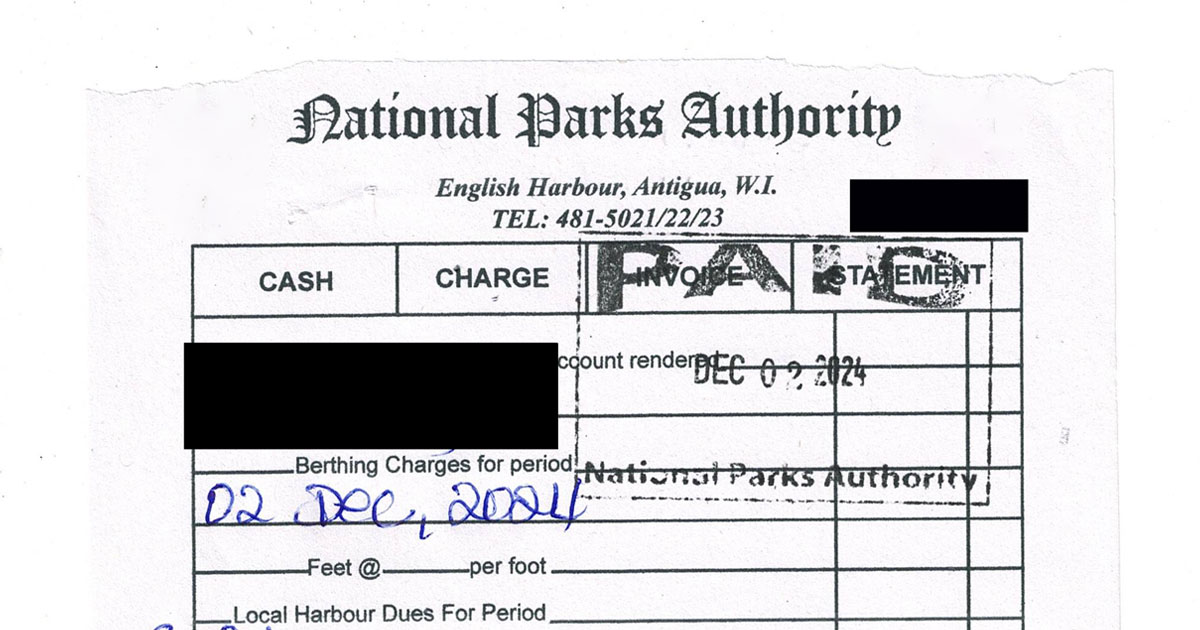
For over twenty years, the NPA had been collecting 5% of all berthing fees from Falmouth Harbour Marina. When the marina asked to see the legal authority for these charges, the NPA could produce nothing. No board resolution. No written agreement. No statutory basis.
Justice Rene Williams ruled the charges were ultra vires — a legal term meaning beyond the NPA's powers. The fees were not just unjustified. They were illegal.
The court ordered the NPA to refund all payments made after January 1, 2019, plus interest and costs.
This is the critical point: the NPA wasn't just overcharging. It was exercising authority it did not legally have. It invented a fee, collected it for two decades, and when challenged, could not point to a single document that gave it the right to do so.
They didn't just bend the rules. They invented authority that never existed — and no one stopped them.
Why Does the Government Keep Protecting Them?
This is the question nobody in government wants to answer.
The same Parks Commissioner has held the post for more than two decades. In that time, under that leadership, the NPA has never filed audited accounts, has had an entire category of its fees struck down by the High Court as ultra vires, and has repeatedly been found to exercise powers the Act does not grant it.
And the government has done nothing.
Cabinet was formally summoned in May 2025 to address tensions between the NPA and the yacht-industry stakeholders who keep Antigua Sailing Week alive. Ministers know exactly what is happening. And yet — nothing has changed. Not after the audit failures. Not after the court ruling. Not after the complaints from businesses. Nothing.
Under the National Parks Act, the Parks Commissioner is appointed with the approval of the Minister responsible — currently E.P. Chet Greene, our sitting MP.
Under the First Schedule of the Act, the Minister appoints the Chairman and a majority of the Board.
The Board appoints the Commissioner. The Minister appoints the Board. The chain of accountability ends at the Minister's desk.
The legal mechanism to change the NPA's management has always existed. So the question isn't whether the government can act. It's why they won't.
When an authority keeps breaking the law and the government keeps looking away — that's not negligence. That's a choice.
A Conflict of Interest Hiding in Plain Sight
Paragraph 10 of the First Schedule of the National Parks Act is clear. Any Board member with a direct or indirect interest in a matter before the Board must disclose it — and must take no part in the decision.
That protection only works if the Board is made up of independent fiduciaries. It does not work when the seats are filled with political appointees who also hold office inside the governing party. When the same people who decide how public fees are set, how contracts are awarded, and how licences are granted are also sitting in the government's parliamentary caucus, the conflict is structural. It is unavoidable. And it explains a great deal about why Cabinet will not act on its own NPA.
Paragraph 10 was not written to be decoration. It was written to stop exactly this.
What I Am Calling For
- 01 Amend Section 7 of the National Parks Act to impose a fixed term limit on the Parks Commissioner — and bring the post under Public Service Commission oversight. No single office with this much public money passing through it should sit outside the same review that applies to every other senior public officer.
- 02 A full independent review of the NPA's authority. Every fee, every charge, every power the NPA exercises should be tested against the Act. If they've been operating beyond the law in one area, where else have they overstepped?
- 03 Enforce Paragraph 10 of the First Schedule. Every member of the Board should file a public register of interests. Sitting parliamentarians and party officers should be ineligible to sit on a Board that sets fees, grants licences, and awards contracts on behalf of the same government that appoints them.
- 04 Chet Greene must publicly answer: why has the government allowed an authority found to be acting illegally to continue operating without consequence? What is the relationship that makes the NPA untouchable?
The National Parks Authority was created to protect and manage one of the most important heritage sites in the Caribbean. Instead, it has become an authority that operates outside its own law, answers to no one, and is protected by a government that has the power to fix it — and refuses to.
The people of St. Paul's deserve to understand why. And if the minister responsible cannot explain it — the voters already have their answer.
An authority that answers to no one
is not an authority that serves you.